Thursday, June 17, 2010

2011 Beehive Nominees


Every year a committee of teachers, librarians and lovers of children's literature in Utah nominate books in five areas: children's fiction, children's picture books, young adult books, children's poetry, and informational books. Throughout the year, readers are invited to vote for their favorites at their local libraries and the winners are awarded the Beehive Award each spring. Many states have a similar award, and authors love to receive these awards because they reflect their readers' preferences.

There are some great choices among these nominees that you might enjoy . . . .


Children's Fiction
11 Birthdays by Wendy Mass

Amanda and Leo are celebrating their same-day birthday separately this year, when peculiar things begin to happen.

The Adventurous Deeds of Deadwood Jones by Helen Hempbill


Prometheus Jones and his cousin Omer flee Tennessee to join a cattle drive headed to Texas, in a land still recovering from the Civl War.

Binky the Space Cat by Ashley Spires

Binky makes plans to blast-off into outer space to battle aliens.


The Evolution of Calpurnia Tate by Jacqueline Kelly

In central Texas in 1899, eleven-year-old Callie Vee Tate is surrounded by her large, loving and opinionated family.


Extra Credit by Andrew Clements; illustrated by Mark Elliott

As letters go back and forth between Illinois and Afghanistan, Abby, Amira, and Sadeed begin to look forward to each others' letters.


The Leanin' Dog by K.A. Nuzum

In wintry Colorado during the 1930s, eleven-year-old Dessa Dean greets the arrival of an injured dog as just what she needs.


Me and the Pumpkin Queen by Marlane Kennedy

Much to her aunt's dismay, eleven-year-old Mildred is determined to grow a pumpkin big enough to win the annual Circleville, Ohio, contest.


Mudville by Kurtis Scaletta

After twenty-two years it finally stop raining in Moundville, and twelve-year-old Roy makes plans to put together a baseball team.


Where the Mountain Meets the Moon by Grace Lin

Minli, an adventurous girl from a very, poor village, is joined by a dragon on a dangerous quest.


The Year the Swallows Came Early by Kathryn Fitzmaurice

Eleven-year-old Groovy Robinson enjoys cooking and has big plans to become a professional chef until her father is sent to jail.


Children's Picture Books

The Apple-Pip Princess by Jane Ray

In a land that has stood barren, parched by drought and ravaged by frosts since the Queen's death, the King sets his three daughters the task fo making the kingdom bloom again, and discovers that sometimes the smallest things can make the biggest difference.


Birds by Kevin Henkes; illustrated by Laura Dronzek

Fascinated by the colors, shapes, sounds, and movements of the many different birds she sees through her window, a little girl is happy to discover that she and they have something in common.


That Book Woman by Heather Henson; illustrated by David Small

Young Cal, who lives high in the Appalachian Mountains with his family, does not understand his sister's love for books, but the Book Woman always wanders to their home, and Cal's parents are always willing to trade something to keep Cal's sister reading.


Chicken Cheeks by Micahel Ian Black, illustrated by Kevin Hawkes

Simple rhyming text and illustrations present the hindquarters of various animals, including moose, chickens, polar bears, and guinea pigs.


(Legacy and I went to school with this illustrator, Kevin Hawkes, and he married one of my very good friends.)


The Circus Ship by Chris Van Dusen

A circus ship has an accident off the coast of Maine which leaves the animals stranded, but they are soon taken in by the citizens of a small island who grow fond of the new residents and fight to protect them.


Duck! Rabbit! by Amy Krouse Rosenthal; illustrated by Tom Lichtenheld

Two unseen characters argue about whether the creature they are looking at is a rabbit or a duck.


Higher! Higher! by Leslie Patricelli

A small girl encourages her father to push her perpetually higher on the swing as they try to surpass the height of agiraffe, a mountain, and the very boundaries of Earth.


Just What Mama Needs by Sharlee Glenn; illustrated by Amiko Hirao

A puppy named Abby assumes a different identity for each day of the week until Sunday, when she is just herself.


Most Loved In All the World by Tonya Hegamin; illustrated by Cozbi A Cabrera

Even though Mama is an agent on the Underground Railroad, in order to help others she must remain a slave, but she teaches her daughter the value of freedom through a gift of love and sacrifice.


Tsunami by Kimiko Kajikawa; illustrated by Ed Young

A wealthy man in a Japanese village, who everyone calls Ojiisan, which means grandfather, sets fire to his rice fields to warn the innocent people of an approaching tsunami.


Young Adult Books

Along for the Ride by Sarah Dessen

After moving to spend time with her father and stepmother, Auden becomes friends with a reclusive teen named Eli. As she gets to know Eli better, they begin a relationship that changes from both.

Brooklyn Nine by Alan Gratz

Brooklyn Nine follows a family starting in 1845 through 2002. In nine innings, readers are taken through history to learn about baseball and those who love it.


The Chosen One by Carol Lynch Williams

As a member of a polygamist sect, Kyra is chosen to marry one of the elders. her refusal puts her very life in danger.


Chains by Laurie Halse Anderson

Isabel, a slave, must decide if she is for the loyalists or the rebels in the fight for freedom during the first months of the American Revolution.


The Compound by S.A. Bodeen

Eli's father has feared a nuclear holocaust for years. Now it has finally come and Eli and his family now must live in the protective Counpound.


The Devil's Paintbox by Victoria McKernan

In this gritty tale Aiden and Maddy, orphaned on the prairie, join a wagon train west for a chance at a new life.


Eon: Dragoneye Reborn by Alison Goodman

Eon's purpose in life has been to train to become a Dragoneye. But Eon holds a terrible, deadly secret that may undo everything.


Flygirl by Sherri L. Smith

During WWII, Ida Mae, passing as white, joins the Women Airforce Service Pilots. Her desire to fly outweights the risks of being discovered.


Musician's Daughter by Susanne Dunlap

Theresa's father is found murdered, his violin missing. Her quest to solve this mystery uncovers a plot thick with deceit, betrayal, and intrigue.


My Fair Godmother by Janette Rallison

Savannah wishes that her life could be more like fairy tales where the girl always gets the prince. unfortunately, her wish doesn't turn out so well.


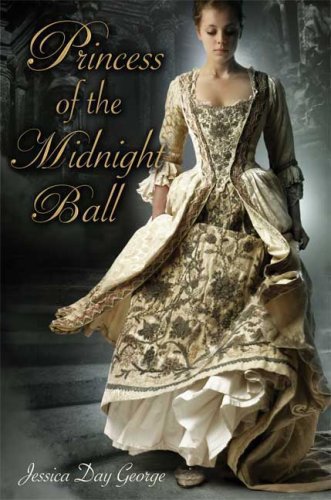
Princess of the Midnight Ball by Jessica Day George

An enchanting story about twelve sisters cured to dance every night to the extent they wear holes in their dancing slippers.


Project Sweet Life by Brent Hartinger

Get a job...what! When three teens are told to get summer jobs they rebel and decide to earn the money they would have made in one big scheme and then take the rest of the summer off.

Children's Poetry


Be Glad Your Nose is on Your Face and Other Poems: Some of the Best of Jack Prelutsky by Jack Prelutsky

This treasury which includes a CD and more than one hundred of Jack Prelutsky's most celebrated verses, along with fifteen all-new poems, is a tribute to his gift to children's literature over the past forty years.


The Bill Martin Jr. Big Book of Poetry

This anthology contains nearly two hundred poems, all of them handpicked by the late Bill Martin Jr., which include traditional children's poems alongside more contemporary pieces paired with illusrations from numerous award-winning picture book atists.


Button Up!: Wrinkled Rhymes by Alice Schertle; illustrated by Petra Mathers

Do you think shoes, jackets, and hats don't have personalitites? Think again! The duds on display in this perfectly stitched poetry collection are as unique as the critters who wear them.


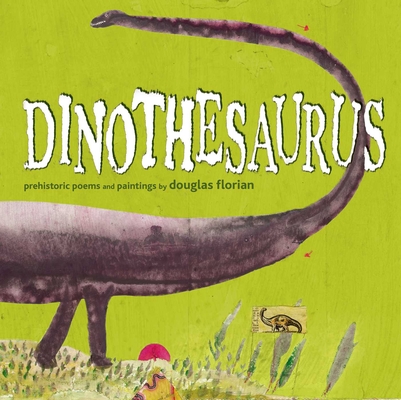
Dinothesaurus: Prehistoric Poems and Paintings by Douglas Florian

Set in spreads of dreamy dinosaur art, these 20 playful paleontologic poems overflow with wit and useful information.


Far From You by Lisa Schroeder

Alice finds herself on a roller coaster of emotions that many teens will relate to in this novel in verse about a girl who survives a deadly snowstorm and discovers what is important in her life.


A Fuzzy-Fast Blur: Poems about Pets by Laura Salas

Are you mad about cats? Love big dogs? From hamsters to tarantulas, this fun collection of original poetry features all your favorite pets!


Partly Cloudy: Poems of Love and Longing by Gary Soto

The fleeting emotions of teenagers, as changeable as the weather, ring true in these emotionally resonant poems about falling in love for the first time, pining over crushes, and brooding over broken hearts.


Truckery Rhymes by Jon Scieszka; illustrated by David Shannon, Loren Long, and David Gordon

From beloved truck tales to rowdy rhymes and honk-along songs, all your favorite "Truckery" rhymes have been gathered into one big, noisy, high-octane collection!


The Underwear Salesman: Jobs for Better Verse by J. Patrick Lewis; illustrated by Serge Bloch

Forty-nine poems describe nearly as many occupations, most of them nontraditional including an ice sculptor, belly dancer and a highway line painter in a variety of styles; rhyming pairs, quatrain, and limerick, to name a few.


Whiff of Pine, Hint of Skunk: a Forest of Poems by Deborah Ruddell; illustrated by Joan Rankin

Take a lighthearted romp through four seasons in the forest with these whimisical poems. The woods have never been so much fun!


Informational Books


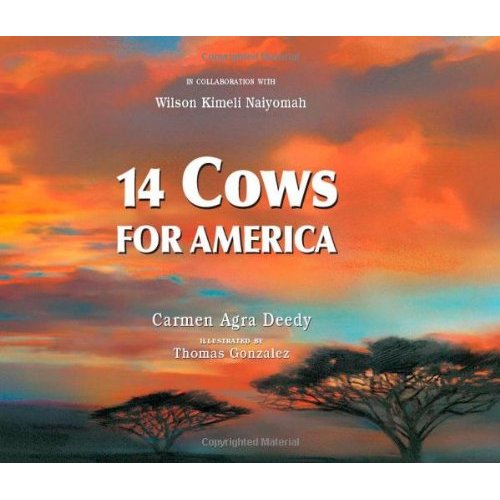
14 Cows for America by Carmen Deedy and Thomas Gonzalez
After the 9/11 attacks in New York, a Masai village gives a heartfelt gift to the American people.


Almost Astronauts: 13 Women Who Dared to Dream by Tanya Lee Stone

The story of 13 women in the 1960's who sacrifice for the opportunity to become astronauts.


The Boy Who Invented TV: The Story of Philo Farnsworth by Kathleen Krull and Greg Couch

Inspired by parallel field furrows, a young Utah farm boy invents the television.


Darwin by Alice McGinty and Mary Azarian

A picture-book quality biography emphasizing Darwin's curiosity and determination.


Down, Down, Down: a Journey to the Bottom of the Sea by Steve Jenkins

A biography of the imaginative and intellectual slave-born black scientist and artist.


George Washington Carver by Tonya Bolden

A biography of the imaginative and intellectual slave-born black scientit and artist.


Life in the Wild: George Shaller's Struggle to Save the Last Great Beasts by Pamela S. Turner

The pioneering animal conservationist's story of studying exotic animals in the wild.


Mermaid Queen: the Spectacular True Story of Annette Kellerman, Who Swam Her Way to Fame, Fortune & Swimsuit History by Shana Corey

The brightly illustrated story of the record-breaking female athlete who pioneered the modern woman's bathing suit.


Nic Bishop Frogs by Nic Bishop

An up close and memorable photographic tour of the amazing world of frogs.


You Never Heard of Sandy Kofax?! by Jonah Winter and Andre Carriho

Illustrations draw the reader into this biography of the gifted, young, Jewish pitching ace.

Friday, June 11, 2010

Food, friends and belly laughter


We had a great time--and a big turnout--at Jade's house to discuss Their Eyes Were Watching God. But first, we enjoyed our semi-annual potluck dinner:

Cream puffs
Caramel bars
Oatmeal cookies
Chips and salsa
Bean salad
Fritos salad
Rhubarb crisp
Spinach salad
Broccoli salad (an Interrupters staple)
Potato salad
Rice and orange chicken
Shrimp
Vegetable tray
Did I forget anything?

Yummy, yummy food.

We can always rely on a lot of laughter, but Ambi's return to the group took things to a "whole 'nother" level - pugnacious ? (blush).

Thanks, Jade, for leading a very interesting discussion. I think we all enjoy reading books that offer us a glimpse into a different culture, time period, and life experience.

 We talked about too many things to recap here, but we had quite a discussion on race and the meanings of skin color. We talked about the language, the imagery, the characters. As usual, we didn't agree on everything, which makes things more interesting. For instance, Queene didn't think Janie evolved as a character.

I learn so much every month--about the book, the author, and about the strong, talented, smart and funny women I've come to love. This month we met Hermana's daughter and learned the remarkable story about her adoption.

I want to thank everyone for singing happy birthday to me, especially Ambi, whose lovely rendition left me almost in tears.

Wednesday, June 2, 2010

Their Eyes Were Watching God


About the Zora Neale Huston

• Birth—January 7, 1891
• Where—Eatonville, Florida, USA
• Death—January 28, 1960
• Where—Fort Pierce, Florida
• Education—B.A., Barnard College (the school's first black
graduate); anthropology at Columbia University


In her award-winning autobiography, Dust Tracks on a Road(1942), Zora Neale Hurston claimed to have been born in Eatonville, Florida, in 1901. She was, in fact, born in Notasulga, Alabama, on January 7, 1891, the fifth child of John Hurston (farmer, carpenter, and Baptist preacher) and Lucy Ann Potts (school teacher). The author of numerous books, including Their Eyes Were Watching God, Jonah's Gourd Vine, Mules and Men, and Moses, Man of the Mountain, Hurston had achieved fame and sparked controversy as a novelist, anthropologist, outspoken essayist, lecturer, and theatrical producer during her sixty-nine years.

Hurston's finest work of fiction appeared at a time when artistic and political statements--whether single sentences or book-length fictions--were peculiarly conflated. Many works of fiction were informed by purely political motives; political pronouncements frequently appeared in polished literary prose. And Hurston's own political statements, relating to racial issues or addressing national politics, did not ingratiate her with her black male contemporaries. The end result was that Their Eyes Were Watching God went out of print not long after its first appearance and remained out of print for nearly thirty years. Henry Louis Gates, Jr., has been one among many to ask: "How could the recipient of two Guggenheims and the author of four novels, a dozen short stories, two musicals, two books on black mythology, dozens of essays, and a prizewinning autobiography virtually 'disappear' from her readership for three full decades?"

That question remains unanswered. The fact remains that every one of Hurston's books went quickly out of print; and it was only through the determined efforts, in the 1970s, of Alice Walker, Robert Hemenway (Hurston's biographer), Toni Cade Bambara, and other writers and scholars that all of her books are now back in print and that she has taken her rightful place in the pantheon of American authors.

In 1973, Walker, distressed that Hurston's writings had been all but forgotten, found Hurston's grave in the Garden of Heavenly Rest and installed a gravemarker. "After loving and teaching her work for a number of years," Walker later reported, "I could not bear that she did not have a known grave." The gravemarker now bears the words that Walker had inscribed there:

ZORA NEALE HURSTON
GENIUS OF THE SOUTH
NOVELIST FOLKLORIST ANTHROPOLOGIST
(1891-1960)


More About Huston
During the 1920s, African-American culture in the United States received an exhilarating shot in the arm in the era known as the Harlem Renaissance. For the first time, black American art, music, and literature was being taken seriously among the intelligentsia as a significant force in contemporary culture. At the front of that movement were several writers, including Zora Neale Hurston.

Hurston's work reflected the liberation and experimentation of post-war America. She published stories and co-founded the groundbreaking journal 
Fire! with poet Langston Hughes and novelist Wallace Thurman. By the ‘30s, Hurston was a bestselling writer, but with the Renaissance on the wane and a new era of politics, economic depression, and the "social realism" movement, Hurston's once glorious literary career was running into dire straits. She would end her life destitute, practically forgotten, buried in an unmarked grave in Florida. However, a resurgence of interest in her work during the 1970s and the tireless work of writer Alice Walker would help reestablish Hurston in her rightful place as one of America's greatest and most influential writers.

Born in Eatonville, Florida, in 1891 to a father who was a Baptist preacher, Hurston was well-versed from birth in the dynamics of the Southern black experience. She brought that keen vision to her writing and published her first story in the Howard University literary magazine while attending the school in 1921. Still, it was not until Hurston moved to New York City in 1925 that she really began to make waves on the literary scene. Her writing was characterized by its unflagging honesty and strength, qualities that Hurston herself exuded. She often ruffled feathers by refusing to adhere to the constricting gender conventions prevalent at the time. This strength and self-confidence was already apparent in the writer's very first works. Her debut novel 
Jonah's Gourde Vine was praised byThe New York Times as "the most vital and original novel about the American Negro that has yet been written by a member of the Negro race." Her second was a bona fide classic, Mules and Men, a compendium of African American folk tales, songs, and maxims that drew on Hurston's extensive studies in Anthropology.

By the time Hurston published her signature work 
Their Eyes Were Watching God, the freestyle experimentalism of the Harlem Renaissance was being increasingly overcast by the Great Depression. As a result, a backlash ensued. Their Eyes Were Watching God, which told of a woman named Janie Crawford who goes through three marriages to separate men as she struggles to realize herself, was too steeped in the experimentalism of the Renaissance to please critics. Furthermore, her portrayal of a black woman's search for personal liberation was too much for many black men to stomach. Richard Wright, the acclaimed author of Native Son, even dismissed Their Eyes Were Watching God for not being "serious fiction." Today, such criticism may seem absurd, or at the very least, incredibly short-sighted, but at the time, Hurston's daring prose was not in vogue amongst the social realists.
Their Eyes Were Watching God, instead, displays a true structural adventurousness, splitting between the eloquence of the narrative voice and the idiomatic, ungrammatical dialogue of the black, southern characters. While works of the social realism movement were easily categorized by their left-wing politics and gritty delivery, Their Eyes Were Watching God was less simple to pigeonhole. It is at once a product of the Harlem Renaissance, an example of Southern literature along the lines of Faulkner, and a work of feminist literature. Consequently, the novel was criticized for being out of step with the times, and it went out of print very shortly after being published, leading to the collapse of Hurston's career and her standing as a significant literary figure.

Hurston would die in 1960, back in Florida, destitute, forgotten. Her books long unavailable, her death barely registered. She would not return to the public eye until 1975, when Alice Walker published an essay titled "In Search of Zora Neale Hurston" in 
Ms. magazine. Along with other writer including Robert Hemenway and Tony Cade Bambara, Walker went on a crusade to revitalize Hurston's career fifteen years after the writer's death.

When 
Their Eyes Were Watching God was finally republished, it was reevaluated as a classic. Today, the novel is required reading in universities all over the country, and Hurston is widely acknowledged as one of the first great African-American women writers. As a final tribute to her idol, Walker also traveled to Florida where Hurston is buried and placed a marker on her grave, a long-overdue tribute to a great American writer reading with beautiful simplicity: "Zora Neale Hurston: Genius of the South." 


Discussion Questions
1. What kind of God are the eyes of Hurston's characters watching? What is the nature of that God and of their watching? Do any of them question God? 

2. What is the importance of the concept of horizon? How do Janie and each of her men widen her horizons? What is the significance of the novel's final sentences in this regard? 

3. How does Janie's journey--from West Florida, to Eatonville, to the Everglades--represent her, and the novel's increasing immersion in black culture and traditions? What elements of individual action and communal life characterize that immersion? 

4. To what extent does Janie acquire her own voice and the ability to shape her own life? How are the two related? Does Janie's telling her story to Pheoby in flashback undermine her ability to tell her story directly in her own voice? 

5. What are the differences between the language of the men and that of Janie and the other women? How do the differences in language reflect the two groups' approaches to life, power, relationships, and self-realization? How do the novel's first two paragraphs point to these differences? 

6. In what ways does Janie conform to or diverge from the assumptions that underlie the men's attitudes toward women? How would you explain Hurston's depiction of violence toward women? Does the novel substantiate Janie's statement that "Sometimes God gits familiar wid us womenfolks too and talks His inside business"? 

7. What is the importance in the novel of the "signifyin'" and "playin' de dozens" on the front porch of Joe's store and elsewhere? What purpose do these stories, traded insults, exaggerations, and boasts have in the lives of these people? How does Janie counter them with her conjuring? 

8. Why is adherence to received tradition so important to nearly all the people in Janie's world? How does the community deal with those who are "different"? 

9. After Joe Starks's funeral, Janie realizes that "She had been getting ready for her great journey to the horizons in search of people; it was important to all the world that she should find them and they find her." Why is this important "to all the world"? In what ways does Janie's self-awareness depend on her increased awareness of others? 

10. How important is Hurston's use of vernacular dialect to our understanding of Janie and the other characters and their way of life? What do speech patterns reveal about the quality of these lives and the nature of these communities? In what ways are "their tongues cocked and loaded, the only real weapon" of these people?


Learn More
If you want to learn more about the book--themes, characters, analysis, more questions, etc.--check out this learning guide or this one.


Movie
The book was made into a television movie in 1995, starring Halle Berry. If you like watching the movie adaptations after you read the book, it is available to rent at Blockbuster.

Thursday, May 20, 2010

genius among us

A writer from Utah was visiting with a publisher in New York City who asked, "What is going on in Utah? There are so many great writers there." I have noticed the great success of Utah writers in recent years and thought you might enjoy learning about some of them.

We have a very vibrant publishing market here in Utah. Most of the books published are for the LDS market, and  every spring, at the end of the LDStorymakers Conference, Whitney Awards are announced for LDS authors. This year the winners were:

Best Romance
"Counting the Cost by Liz Adair


Best Mystery/Suspense
"Methods of Madness" by Stephanie Black


Best Youth Fiction
"The Chosen One" by Carol Lynch Williams


Best Speculative Fiction
"Servant of a Dark God" by John Brown


Best Historical Fiction
"The Last Waltz" by G.G. Vandegriff


Best General Fiction
"Hotel On The Corner Of Bitter And Sweet" by Jamie Ford


Best Novel by a New Author A TIE!
Gravity vs. The Girl by Riley Noehren AND I Am Not A Serial Killer by Dan Wells


Best Novel of the Year
"In the Company of Angels" by David Farland


Though most of these books were published locally and were written for the LDS audience, there are many authors who have been very successful in the national market. Here are a few of them:

Shannon Hale
Shannon is one of my very favorite authors. If you have the chance to hear her speak, don't pass it up! As Apple can confirm, she is funny, charming, clever and fun. However, she is the mother of two and is expecting twins so she has dramatically curtailed her activities. She is a writer who likes to write in a variety of genres, but my favorites are her young adult fantasies. The next one will be published in 2011!

Jessica Day George
Jessica is a smart, spunky, quick-witted author of young adult fantasies and fairy tale retellings. Her newest book is Princess of Glass. Love her.

James Dashner
When I first met James he was being teased by other authors for his unabashed self-promotion, but his ultimate success has been gratifying because he has worked so hard and been so single-minded. His book The Maze Runner (which might appeal to Hunger Games fans) is being made into a movie and you can watch the trailer here.

Brandon Sanderson
If you are a fantasy fan then you will know Brandon Sanderson, who received the great distinction of being chosen to write Robert Jordan's final book in The Wheel of Time series. When Jordan died of cancer, two of my sons who had invested in all eleven books of the unfinished series were devastated by the thought that they would never find out how the story ended. Sanderson was also a fan and wrote a beautiful eulogy of Robert Jordan on his blog. Jordan's widow read it and researched Sanderson's writing style. She felt that it was very similar to her husband's, though a bit darker, and invited him to finish the series, which has turned into three books instead of one, only one of which has been published so far. He teaches a writing class at BYU every winter semester and his students rave about him.

Richard Paul Evans
Perhaps you all know about Richard Paul Evans' unusual career path. He was an advertising executive when he wrote The Christmas Box. He published and advertised the book himself and it became a local bestseller, which prompted an auction among the world's top publishers. The rest is history, as they say.

Brandon Mull
Brandon Mull makes me smile because he is the nicest guy. He used to be in a comedy troupe and he is funny, too. When he came to the library to speak and sign books he stayed deep into the night, way past library closing time, to sign every last child's copy of Fablehaven. There is no publication date yet for his next series, The Beyonders, which was actually written before the Fablehaven series.

Dean Hughes
Hughes has written a handful of books for the LDS market, but most of his 90+ books for children and young adults has been in the national market. In 2008 he received a Lifetime Award at the Whitneys.

Tracy Hickman
Hickman is a writer of many fantasy books and a game designer. Think Dungeons & Dragons. This may not be your cup of tea, but he has been very successful.

Michael O. Tunnell
Michael is a children's literature professor at BYU. He has published a dozen books, picture books, young adult fantasy, non-fiction, etc. He has also served on two Newbery committees (Maniac Magee and Graveyard Book) and written a popular textbook on Children's Literature that is used in colleges across the country. He is passionate about children's literature and when I found out he despised one of my favorite authors I had to find out why. That was an interesting conversation.

Chris Crowe
Chris is a BYU professor who specializes in young adult literature who has published nine books, one of which you all are familiar with: Mississippi Trial, 1955.


Caralyn Buehner
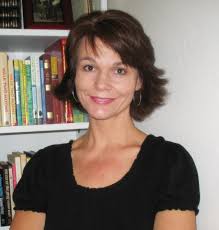
This is the only picture I could find of Caralyn. She must be extremely camara shy.

Caralyn began writing picture books at the urging of her illustrator husband. I'm so glad he succeeded because Fannie's Dream is one of my favorites!

Ann Edwards Cannon
If only Anne were my next-door neighbor, my best friend from third grade or my cousin (She is LaVell Edward's daughter so she is also Julie Edward's cousin-in-law.) She makes me laugh. Luckily, I get a dose of Anne every Monday morning when I read her column in the Deseret News. She teaches writing classes and works at King's English Bookstore and writes books for children and young adults. Her latest book is called The Loser's Guide to Life and Love, which is about four teenagers and their crushes, mistakes, and misunderstandings one summer in Salt Lake City.

Carol Lynch Williams
Carol has written two dozen books for children and teens. Her latest book, The Chosen One, is the highly acclaimed story about a teenage girl who grew up in a polygamist family who decides she doesn't want to be the seventh wife of her 60-year-old uncle.

Sara Zarr

Sara has published three young adult novels and has a fourth coming out this year. An independent filmmaker is making a movie based on her book Story of a Girl.

Mette Ivie Harrison
A few years ago, Mette's husband said, "You are teaching German at the university, writing books, and being a mom. You can only be good at two out of the three. Choose which two you want to do the most." Giving up being a mom was out of the question so she resigned from her professor post. Most of her books are fairy tale retellings.

Kimberley Heuston
Kimberley teaches at Waterford, a private high school in Sandy and writes young adult historical fiction and history books.

Sharlee Glenn
Sharlee Glenn lives in our own neck of the woods, in the neighborhood north of Patriarch Adams. She has published a several picture books and a grade school novel.

This is by no means a comprehensive list, but this post is far too long as it is.

However, I couldn't resist including other authors who have Utah ties. I, for one, like to claim them.

Aprilynne Pike
Aprilynne was living in Springville while her husband went to BYU's law school when she was offered a great deal of money for her fairy trilogy: Wings, Spells and one yet to be published. They have since moved to Arizona. A few years ago, my sister-in-law was her Young Women's leader and she had no inkling that she would become a famous author.

Stephenie Meyer
What can I say? Her level of success doesn't come along very often. Her newest book, The Short Second Life of Bree Tanner will be available free online from June 7 - July 5 at www.breetanner.com.

Orson Scott Card
Perhaps some of you have read Card's historical fiction novels: Rebekah, Sarah, and Rachel and Leah. However, he is most famous for his science fiction novels. He is considered quite the titan in that field.

Kristen Chandler
Kristen Chandler is the latest Utah author I've heard about to get a book deal. She was featured in the Deseret News last Sunday and if you are interested, you can read the article here.

Wednesday, May 5, 2010

Author interview & discussion questions


A Conversation with Timothy Egan

Why a book on the Dust Bowl now?

The story of the people who lived through the nation's hardest economic depression and its worst weather event is one of the great untold stories of the Greatest Generation. To me, there was an urgency to get this story now because the last of the people who lived through those dark years are in their final days. It's their story, and I didn't want them to take this narrative of horror and persistence to the grave. At the same time, this part of America — the rural counties of the Great Plains — looks like it's dying. Our rural past seems so distant, like Dorothy's Kansas in the Wizard of Oz. Yet it was within the lifetime of people living today that nearly one in three Americans worked on a farm. Now, the site of the old Dust Bowl — which covers parts of five states — is largely devoid of young families and emptying out by the day. It's flyover country to most Americans. But it holds this remarkable tale that should be a larger part of our shared national story.

Do you see any parallels between the Dust Bowl and Hurricane Katrina, the worst natural disaster of our time?

There are so many echoes of what happened in the 1930s and the hurricane that hit the Gulf Coast in the summer of 2005. For starters, there were ample warnings that a large part of the United States could be rendered uninhabitable if people continued to live as they did — in this case, ripping up all the grass that held the earth in place. In one sense, the prairie grass was like the levees around New Orleans; the grass protected the land against ferocious winds, cycles of drought, and storms. Then after the big dusters hit, you had a massive exodus: more than a quarter million people left their homes and fled. Never before or since had so many Americans been on the move because of a single weather event — until Hurricane Katrina. And finally there was the whole restoration effort: President Franklin Roosevelt thought he could restore the land to grass, plant trees, and maybe bring it back.
What about the people? Did they ever return?

Not really. The southern plains never fully recovered from the ravages of the Dust Bowl. There was a fascinating debate within the Roosevelt administration about whether to even try to lure people back. Many thought it was futile, that the whole settlement of the area had been a mistake. One pundit, H. L. Mencken, said the people who lived there were too stupid and should be sterilized. "They are simply inferior men," he wrote.

But there was another, more optimistic impulse — reclaim the land to its original state, and then get people to farm in a different fashion. At one point, Hugh Bennett, who led the soil conservation effort, told his restoration army, "We are not merely crusaders, but soldiers on the firing line of defending the vital substance of our homeland."

Beyond the hurricane, what is the relevance of the Dust Bowl to our times?

Remember what Lincoln said: We cannot escape history. That goes for the natural world as well. The Dust Bowl story is a parable, in a way, about what happens when people push the limits of the land. Many people think what happened in the 1930s — with drought, endless hot days, white skies, plants dying and the earth blowing — is a precursor to what could happen as the climate continues to change and the earth heats up.

Yes, you hear a lot of references about a "new Dust Bowl."

But thus far, there has been nothing like the one that took hold of a big part of our country seventy years ago and lasted nearly a decade. Some of these folks I interviewed, they fought in World War II, saw the worst kind of carnage that human beings can inflict on each other, and they say the Dust Bowl was more traumatic.

Why is that?

I think it was because of the uncertainty. The world they had known was changing before their eyes, dying, being swept away. They didn't know what has happening. Many thought the end was near, and not just the Biblical end. It was a risk to your life just to step outside on some days. It was risk simply to take a breath. People wore masks and rubbed Vaseline in their noses as filters. At the same time, twenty-five percent of adults were out of work. If you could find a job, you were lucky to make two dollars a day, which is barely enough to feed a family.

What do you mean when you call the Dust Bowl "the great untold story of the Greatest Generation"?

We know a lot about the Dust Bowl refugees, the so-called Okies and Arkies who migrated west to California and into the Pacific Northwest in the 1930s. Much of this we know from John Steinbeck's masterpiece The Grapes of Wrath, and from the government photographers and writers who did a terrific job of recording this migration. But very little is known about the people who did not leave the Dust Bowl. And as it turns out, most people never moved away. Nearly two-thirds of the Dust Bowl inhabitants hunkered down and lived through the Dirty Thirties. How did they get by? There was no food from the land, no jobs during the Depression, no money from the government until much later. This was my starting point.

And what kind of story is it?

It's a story of survival, of perseverance, of the most corrosive poverty. Of days when the sky turned ink-black at noon, and times when parents gave up their children because they feared they would starve. Of days with no Social Security, no accurate weather forecasts. Most of the Dust Bowlers didn't even have electricity. They ate things like tumbleweeds — salted and canned — or roadkill, cooked over an open fire. And when they would slaughter a pig, as one woman told me, "We ate everything but the squeal."

What kind of peril did the Dust Bowlers face?

Everything the sky could throw at them, it did. In addition to the usual horrors — violent thunderstorms that produced hail the size of baseballs, wildfires that swept over the prairie, tornadoes that could level a town in the blink of an eye — there were these massive, almost otherworldly dust storms. A typical duster was a corrosive mix of sand and high-velocity air that could make cattle go blind and people cough until it hurt. The sky would blacken as these great waves of dust rose up and fell. Sometimes the leading edge of one of these storms was a mile-high. Charles Lindbergh, the greatest aviator of his age, got stuck at the edge of one of these storms and had to make an emergency landing. He said it was the most frightful thing he ever saw as a pilot. And the storms could be lethal. Makeshift hospitals were set up in school gyms for children who fell ill and then died suddenly from something the doctors called "dust pneumonia."

What caused the Dust Bowl? 

Most of the people who lived through it say it was a human tragedy — one part hubris, one part greed, one part bad luck — not some freak of nature. When you look at the relevant weather data and compare it to the historical record, it's very revealing. The wind speeds were about the same as always. The high temperatures in summer and the lows in winter were not that much out of the norm. Yes, there was a terrible drought. But the Great Plains has always had these elements — high winds, heat, cold, and drought. There was not some extraordinary combination of rare and traumatic weather.

So what was different?

The grass — "North America's characteristic landscape," as the poet Walt Whitman called it — was wiped off the face of the southern plains. This great sea of green had anchored the Great Plains for eternity, covering nearly one-fourth of the continent.

The southern plains was a frontier well into the twentieth century. It was the last place to be truly settled by Anglos during the western expansion. Then suddenly came a gold rush of sorts — a gold rush for grain. The price of wheat doubled, tripled, and quadrupled, prompting a stampede to rip up the prairie grass and replace it with wheat. When grain prices crashed, people walked away, or stopped planting. Then the land was barren, with no grass, and it started to blow.

By 1935, more than eight hundred-fifty million tons of topsoil had blown off the southern plains - nearly eight tons of dirt for every resident of the United States. More than one hundred million acres, an area about the size of Pennsylvania, lie in ruin. One of these storms fell on New York, and another one blew dust into the White House and out to ships at sea in the Atlantic.

Do you blame the people who farmed the southern plains for bringing this disaster on themselves?

No. The people who dug up this hard sod, who lived in dirt houses for a while, or underground in homes they called dugouts, who built churches and schools from the raw scraps of the ground, who raised large families and prospered, for a time — these people were doing what Americans have always done. These were Last Chancers: persecuted Germans from Russia, Scots-Irish from the South, Mexicans who platted out homesteads. The southern plains was the last chance for them to own something. But they were encouraged by the railroads and the government to take unrealistic risks. They were told to take out cheap loans and plant as much wheat as possible as a patriotic act. In the same way that people in the cities were speculating, wildly, in the stock market, these farmers took a gamble that the price of wheat would only go up. They took land that was suited for grass and animals that eat grass and turned it into something else. Only a few cowboys and some defeated Comanche Indians tried to warn them off.

Tell us a little bit about the people in your story.

There's a part-Apache cowboy family we follow throughout the story. The father loved horses and empty sky and the grasslands. What happened to the land broke his heart. Some days, he'd come home to see his wife in tears, trembling in the corner of their tiny house, muttering, "The dust, I just can't take it anymore."

There's a woman named Hazel Lucas, with southern charm and a big heart. We see her first as a teenage bride, teaching kids in a one-room sodhouse, and then we watch her try to raise a family and keep her dignity through these awful storms.

There's a hero of the New Deal, Big Hugh Bennett, a farm boy from the south who tried to save the grass in the Dust Bowl and convince people that the grasslands could be restored.

There's an extraordinary, pioneering Jewish family, the Herzsteins, who tried to maintain the rituals of daily life even after they lost a beloved uncle to a gunslinger.

There's a town booster and newspaper man, John McCarty, who tried to make a virtue of the dust storms.

And there was a free-spirited kid, one of nine children living in a hole in the ground, whose only goal was to make it to his senior year in high school.

People do some strange things during the worst years. Tell us about that.

The land was sick, and I think that had an effect on how people lived and acted. Towns would hold rabbit-clubbing rallies. Basically, they'd get everybody out on a Sunday afternoon with clubs and round up thousands of rabbits and club them to death. Strangely, rabbits flourished during the Dust Bowl, living on bugs. And speaking of bugs, some states had to call out the National Guard to try to control the locusts and other pests that descended on this desperate land.

You've written a lot about the Pacific Northwest, where you live. What was it like to shift your focus to the southern plains?

Like going from one planet to the other. I'm used to green — forests, rain country, grass that never turns brown but for the driest month of the year. When I was in the southern plains, I suffered from brownshock! But it's fascinating. For me, like visiting a foreign country. The Plains have a wondrous, savage beauty, but you have to take the time to let it get in your bones, to feel a little bit of the haunt and tease and risk of the land. In some respects, it has the worst weather in the world — tornadoes, whiteout blizzards, flash floods, soul-sapping heat waves. But it's lovely, in its way, especially in the early part of the day before the wind kicks up. I also like the drama of the land — the thunderstorms that come out of nowhere, the sky the stretches to infinity, the sense of being alone, even lost in the eternity of the flatness.

What about the grasslands? Is there anything left?

Yes. And this was one of the big surprises. The land really has healed — in places, at least. When I used to see a "national grassland" on the map, I wondered if it was some kind of joke. It's heartening to see some restoration, but the scars of the Dust Bowl are big, and deep, and lasting.


Discussion Questions

1. Discuss what Egan presents as the reasons for the dust bowl tragedy. Was it a confluence of unforeseen events that produced the perfect storm? Or was it a man-made disaster that might have been avoided, or at least mitigated?

2. Should everyone have known better—was there enough known at the time about the impact of farming techniques on erosion? 

3. Who tried to warn about the dangers of farming in the grasslands and what were the gist of their warnings? Why were they ignored? Is it simply human nature to take heed in hindsight rather than in real time?

4. Talk about the different characters in Egan's story. Which of the families' stories do you find particularly poignant? Which characters do you find most admirable?

5. What descriptions of the dust storms did you find most shocking or most tragic—Black Sunday, static electrcity, dust pneumonia, just to name a few? 

6. During the disaster, 250 million people left their homes—a disapora about which Steinbeck's Grapes of Wrath is written. But most residents stayed. What made them stay? Would it have been better to have left? Which choice would you have made?

7. What was the political outfall of the dust bowl? How did Washington eventually respond? What have been the lasting effects?

8. What lessons, if any, have we learned from the dust bowl castastrophe—about how human actions, well-intentioned or not, can lead to environmental damage? Is there anything comparable on the horizon today?

9. Surviving the Dust Bowl, a 2007 documentary, part of the American Experience series on PBS, would make a valuable contribution to any book club discussion. The film footage is stunning. You could get a copy through your public library or through Netflix.

10. You might also pair this work with Steinbeck's Grapes of Wrath and discuss the human tragedies—and bravery—in both accounts.